How to Choose the Right Generator Set for Your Power Needs?
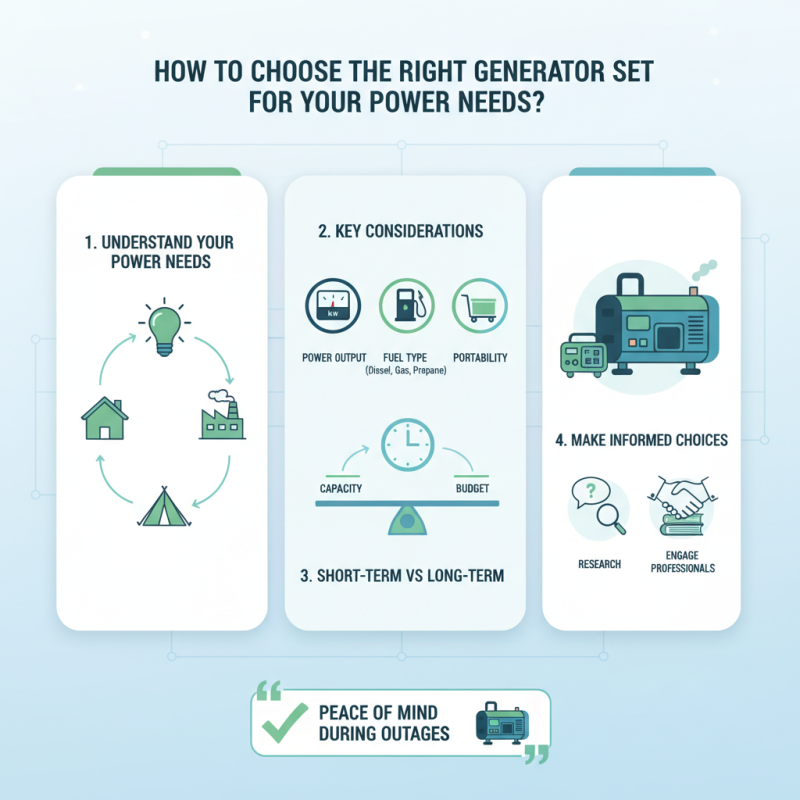
Choosing the right Generator Set can be a daunting task for many. Understanding your power needs is crucial. Expert Robert Wilson, a leading authority in power solutions, often says, "The right generator can provide peace of mind during outages." This sentiment highlights the importance of informed choices.
When selecting a Generator Set, consider the specific requirements of your application. Factors like power output, fuel type, and portability play vital roles. These choices directly impact efficiency and performance. The market offers a range of options, making it easy to feel overwhelmed. A misstep in selection can lead to inadequate power or unnecessary expenses.
It’s essential to reflect on your long-term needs versus short-term solutions. Sometimes, a larger Generator Set seems attractive, but it may not suit smaller applications. Balancing capacity and budget is crucial. Engage with professionals for insights, yet trust your own research. This approach will ultimately empower you to make confident decisions regarding your Generator Set.
Understanding Your Power Requirements
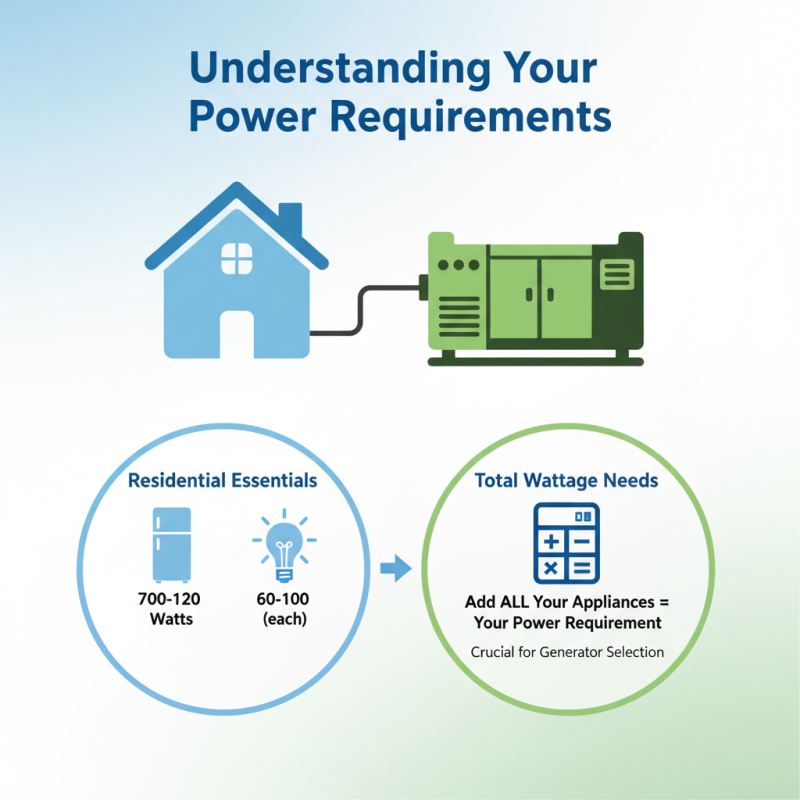
Understanding your power requirements is crucial when selecting the right generator set. Start by calculating your total wattage needs. For residential use, consider essential appliances. A refrigerator may require 700 to 1,200 watts, while lights often need about 60 to 100 watts each. Adding these numbers will help provide a clear picture of your requirement.
Industry reports indicate that around 35% of homes underestimate their power needs during outages. This can lead to inadequate backup solutions. The average power demand in homes can range from 3,000 to 5,000 watts, depending on the appliances used. Each home is unique, and fluctuations in usage can make forecasting tricky. Your energy habits play a significant role in this process.
Prioritize your appliances by importance. During a blackout, consider which devices are essential. Using a calculator for starting vs. running watts can prevent confusion. Failing to understand these differences can lead to selecting an insufficient generator. Many users regret not making detailed plans based on their actual needs, resulting in poor performance and frustration.
Types of Generator Sets Available
When selecting a generator set, understanding the types available is essential. There are several main categories to consider: portable generators, standby generators, and inverter generators. Each serves different purposes and power needs. Portable generators are often smaller and can provide power for tools or appliances during outages. They typically produce between 1,000 to 7,500 watts, making them suitable for temporary applications.
Standby generators are more powerful and are directly connected to a home's electrical system. They automatically turn on during a power outage and can range from 5,000 to 20,000 watts or more. According to industry reports, homeowners often prefer these for their convenience and reliability. Inverter generators are designed for efficiency and quiet operation, making them popular for recreational use. They usually deliver between 1,000 and 4,000 watts, ideal for camping or tailgating. However, their upfront cost can be higher.
Considering the price point, it's vital to assess output needs accurately. Many users underestimate their wattage requirements, leading to insufficient power during critical times. A study indicates that 30% of generator users face problems due to miscalculating their needs. This highlights the importance of evaluating your specific power requirements before making a purchase decision. Understanding these various types ensures you choose the right generator for your situation.
How to Choose the Right Generator Set for Your Power Needs? - Types of Generator Sets Available
| Type of Generator Set |
Power Output (kW) |
Fuel Type |
Application |
Run Time (hours) |
| Portable Generator |
1-10 |
Gasoline |
Home Backup, Camping |
5-10 |
| Inverter Generator |
1-6 |
Gasoline |
Sensitive Electronics, RV |
8-12 |
| Diesel Generator |
10-250 |
Diesel |
Commercial, Industrial |
24-48 |
| Natural Gas Generator |
10-100 |
Natural Gas |
Residential, Commercial |
24+ (with tank) |
| Solar Generator |
1-5 |
Solar |
Camping, Outdoor Activities |
Variable (depends on sunlight) |
Key Features to Consider When Selecting a Generator
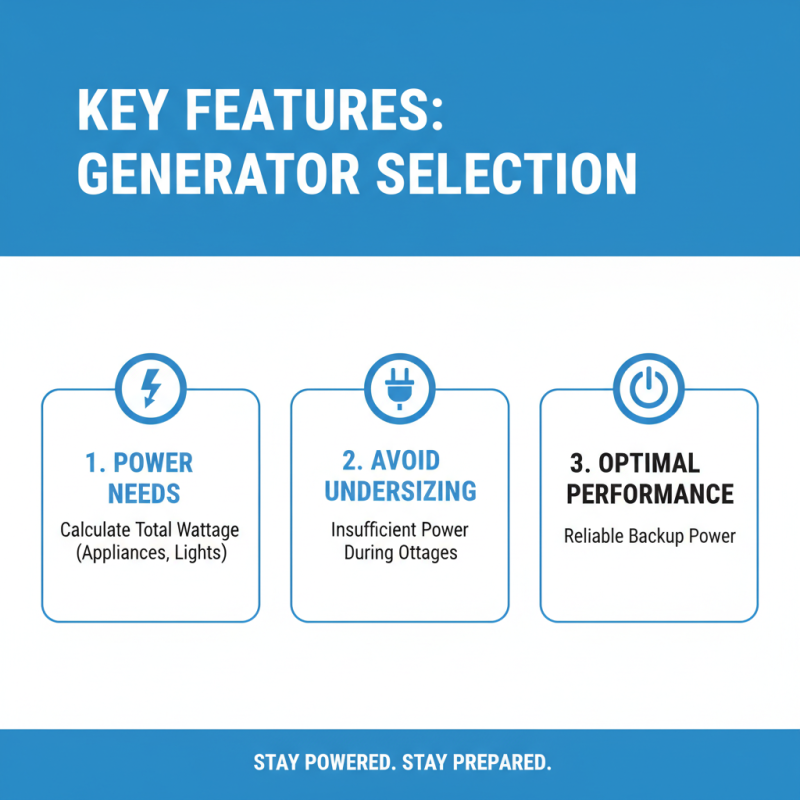
Choosing the right generator set involves several key features that can affect your experience. Start by determining your power needs. Calculate the total wattage required for your appliances. This includes refrigerators, lights, and other devices. An undersized generator may not deliver sufficient power, leaving you in the dark during outages.
Consider fuel type as well. Diesel generators are often more efficient, but gasoline models are typically more accessible. Each fuel type has its pros and cons, impacting operational costs and availability. Look into run time as well. A generator with a longer run time can provide steadier power during extended outages, allowing for peace of mind.
Noise levels shouldn't be overlooked. Some generators operate at a significantly lower decibel level, making them more suitable for residential areas. If you live in a tight space, this can be crucial. Also, portability and weight can influence your choice. A heavier generator may be less convenient, especially if you plan to move it often. Remember, prioritizing features often leads to trade-offs. Balancing power needs with logistics can enhance your generator experience.
Assessing Fuel Types and Efficiency
When selecting a generator set, understanding fuel types and efficiency is essential. Each fuel type brings distinct benefits and drawbacks. Diesel generators are often lauded for their fuel efficiency, typically delivering 30% better efficiency than gasoline generators. A report by the U.S. Energy Information Administration highlights that diesel fuel yields more energy per gallon, making it a popular choice for prolonged use.
However, gasoline generators can be more convenient for smaller power needs. They often have a lower upfront cost and are usually lighter. Their portability makes them ideal for recreational use. But in terms of fuel efficiency, they fall short. According to industry studies, gasoline generators can consume up to 20% more fuel for comparable output.
Natural gas is emerging as a versatile option, especially for stationary installations. Availability in urban areas enhances its practicality. A recent study indicated that natural gas can reduce carbon emissions by 30% compared to diesel. However, installation costs can be higher, and the infrastructure may limit accessibility in some regions. Considering these factors is crucial when choosing the right generator set. Reflecting on your actual power needs and usage patterns can lead to a more informed decision.
Evaluating Brands and Warranty Options
When selecting a generator set, brand reputation and warranty options significantly influence your decision. A reliable brand often reflects years of engineering expertise and user satisfaction. According to industry reports, nearly 75% of consumers prioritize brand trust as a key factor in their purchase decisions. Quality assurance is crucial. A transparent warranty can enhance your purchase experience.
Look closely at warranty length and coverage details. Many manufacturers offer warranties ranging from one to five years. Some studies indicate that a wider coverage can save you up to 20% on maintenance costs. Check what is included. Some warranties cover parts only, while others extend to the entire generator. The breadth of coverage reflects the manufacturer’s confidence in their product.
It is essential to research customer feedback on warranty claims and brand reliability. Some brands may present favorable warranties but fall short on actual service. Data shows that about 30% of customers express dissatisfaction with post-purchase support. Prioritize reviews that discuss repair experiences. Validating the reliability of your choice will provide peace of mind in your power supply decision.
Power Needs Evaluation for Generator Sets
This chart illustrates the power requirements for various applications of generator sets. Understanding these power needs is essential for selecting the right generator set to match specific usage scenarios.